
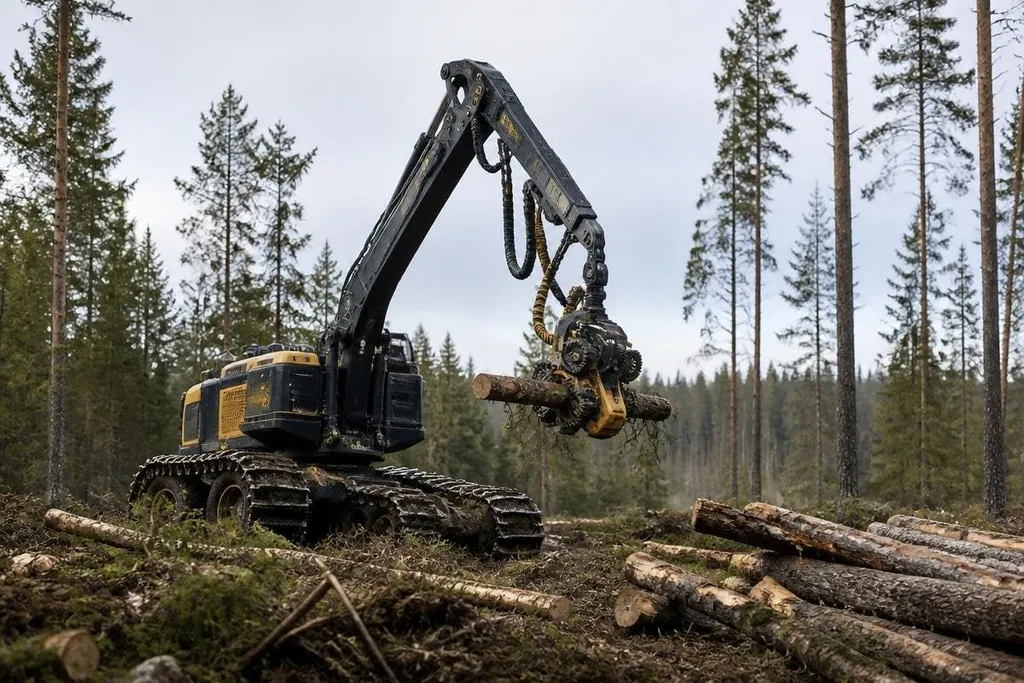
A forestry robot has to work on uneven ground, around living trees, and far from a clean factory floor. That makes any claim hard to judge without trial data, and no evidence pack was supplied here to support a ranking of named machines.
Quick read
- Look for field trials with a named forest owner, site, and task.
- Check fuel, battery, slope, payload, and repair figures before trusting a claim.
- Treat a video demo as an early test, not proof of forest work.
What a useful forestry robot must handle
The first area to watch is movement. A machine may need to cross mud, roots, rocks, and slopes while carrying tools or a load.
A claim about autonomous systems only helps if it states the ground type, slope, speed, and number of human interventions. Sensors matter for the same reason.
For a machine that spots a tree, stump, worker, or fallen branch, a clear account should name the cameras, LiDAR, or other sensors used, plus the weather and light during the test. Dense leaves, rain, dust, and low sun can change what the robot sees.
The work itself needs proof. “Forest automation” can mean mapping trees, moving logs, cutting brush, planting seedlings, or checking tree health. Those tasks need different tools, safety rules, and measures, so a useful report names the exact job rather than placing every machine in one group.
The areas worth watching
Four areas could change forestry work if field results support the claims. Each one needs a different form of evidence.
Tree mapping and inspection should show how a machine counts trees, measures trunks, or finds damage. The useful figures are area covered, position accuracy, time per hectare, and the amount of manual checking still needed.
Machines that remove brush or cut selected plants face a narrow safety margin. Reports should show how the robot identifies the target, stops near people, and avoids nearby trees. A clean test plot says little about thick growth or broken ground.
Transport robots may reduce walking or driving time between a work site and a road. Their test reports need payload, distance, slope, battery or fuel use, and recovery steps when wheels or tracks lose grip.
Planting systems should report survival after the work, not only the number of seedlings placed. The soil type, weather, planting depth, spacing, and follow-up period all affect the result.
A forestry buyer can start with Robot24.com robotics coverage, then trace each dated claim to the original trial or research paper.
The same rule applies to forestry robotics: the source and test conditions matter as much as the machine name.
Where the claims can fail
Forestry has a cost problem that a laboratory demo may hide. A robot can complete a task and still make poor business sense if transport, charging, supervision, repairs, or tree damage add too much cost.
Safety also changes the test. A machine working near a chainsaw, vehicle, or falling tree needs clear stop controls and a work plan that covers signal loss, sensor failure, and a person entering the work area. Those details belong in the result, not in a footnote.
The open question is repeatability. One successful run may show that a task is possible. It does not show that the same task works across different forests, seasons, soil types, and weather conditions.
A buyer's evidence checklist
Before giving a forestry robotics claim your time or budget, check these points:
- Named site: Find the forest, country, terrain, and owner involved in the test.
- Measured task: Look for a clear job, such as mapping, planting, cutting, or transport.
- Human input: Count remote operators, manual fixes, and safety stops during the run.
- Operating cost: Ask for energy use, maintenance, transport, and labor figures.
- Repeat tests: Check if the machine ran across more than one site or season.
- Failure record: Find the tasks it could not finish and the reason each run stopped.
Forestry robotics earns attention when it shows repeatable work under named field conditions, with costs and failures included. Without those details, I'd skip any list of the “biggest” breakthroughs and wait for the next published trial to show what actually works.